
After 40, look for the gym you will still be attending in 12 months: one with qualified coaches, an assessment before any programming, a firm cap on session size, and someone who notices when you miss. Gym tours tend to show you something else. You see the sauna, the rows of machines, the smoothie bar, and the class schedule, and none of it tells you whether you'll still be going a year from now. Below is what the research on gym retention and supervised training shows, plus a checklist of questions to bring on any tour in Middleton, West Madison, or Verona. Use it on us, too.
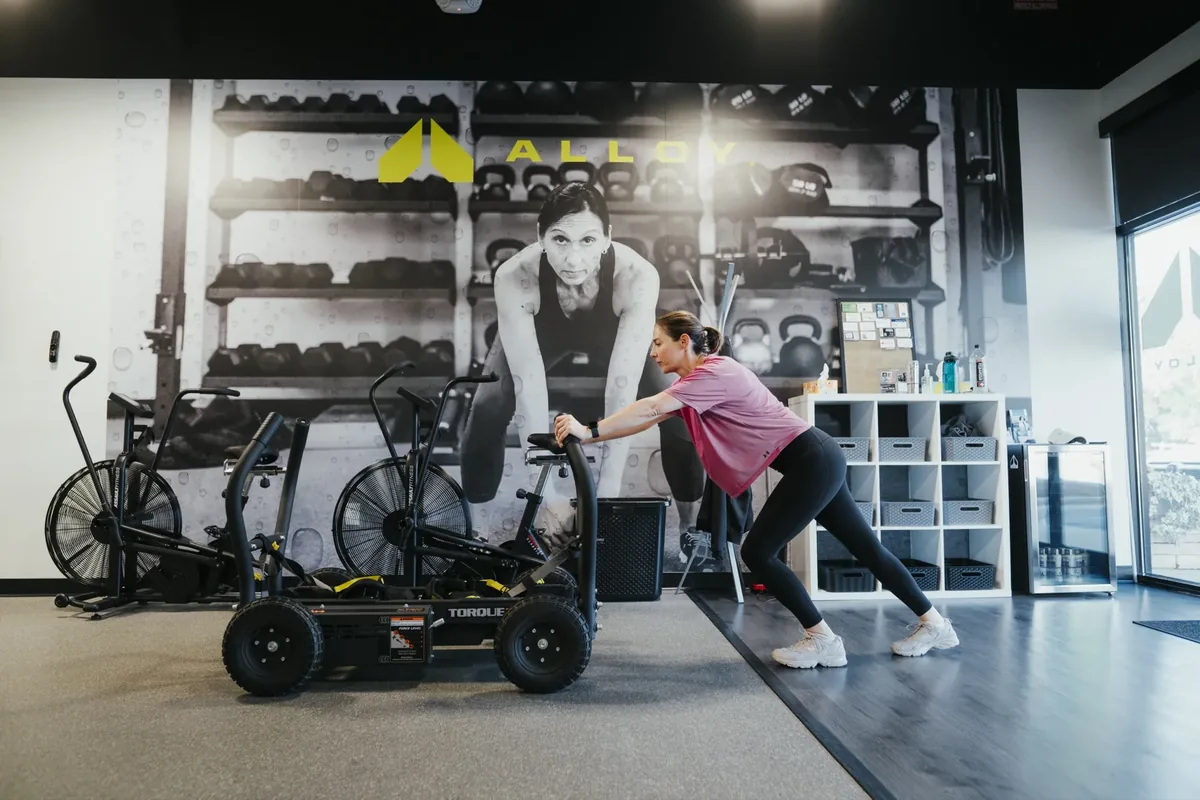
Why is the nicest gym the wrong thing to shop for?
Because a nice locker room won't keep you coming back, and coming back is the whole game. The Health & Fitness Association (formerly IHRSA) put average annual member retention at 66.4% in its 2025 Fitness Industry Benchmarking Report, which drew on 2024 data from 175 companies across 27 countries. In other words, roughly one in three members leave each year.
And quitting isn't a character flaw. A 2016 study of 5,240 gym members in the Journal of Science and Medicine in Sport found that even the members with the most favorable combination of predictors still carried a high risk of dropping out before 12 months. What matters is whether the gym is built to carry you through the weeks when motivation dips.
So flip the question: which gym will you still be attending in 12 months? That moves the tour away from the equipment and toward the people, the structure, and what happens on a bad week.
What actually keeps people training for a full year?
People and structure, if the retention research is any guide. A 2026 study in Frontiers in Public Health looked back across seven years at a coach-supervised small-group studio capped at five people per class. Of 587 adults, median age 63 (range 40–85), 51.7% were still active at 12 months, and mean participation was 13.8 months. The paper contrasts that with earlier research showing 40–70% dropout within the first 6 months at conventional gyms, and it names the first three months as the critical window for building the habit.
Keep the limits in mind: one studio, analyzed after the fact, not a controlled trial. It shows what's possible in a coached, capped setting, not a guarantee.
Older industry data points the same way. The IHRSA and The Retention People Member Retention Report, built on UK data from more than 13,000 members collected between 2014 and 2016, found gym-only members were 56% more likely to cancel than group exercisers (27.6 versus 17.7 cancellations per 1,000 members a month). Every two staff interactions in a month were associated with one extra visit the next month, and what the report calls a "commitment interaction" cut next-month cancellation risk by 45%. People tend to come back to places where someone knows them.
Does a coach in the room change your results?
The research favors it, modestly but consistently. A 2024 meta-analysis in Sports Medicine pooled 34 randomized controlled trials with 2,830 adults aged 60 and over. Supervised exercise beat unsupervised exercise on knee-extension strength (the outcome that survived the authors' sensitivity analyses), lean mass (+1.05 kg), gait speed, the timed-up-and-go test, and quality of life. Attendance was similar in both groups, around 81%, which suggests the difference came from what happened during sessions rather than how often people showed up.
An earlier 2017 meta-analysis by Lacroix and colleagues, also in Sports Medicine, found supervised balance and resistance training superior to unsupervised training for muscle strength and power. Both reviews focus on older adults, but the practical point carries to any age: a coach sees what you can't see in your own form.
That matters because most adults in midlife aren't doing enough strength work. In 2020 National Health Interview Survey data published by the CDC's National Center for Health Statistics, only 29.9% of men and 23.8% of women aged 45–64 met the federal muscle-strengthening guideline. If lifting is new to you, or new again, choose a place where someone teaches it well.
What should you ask on a gym tour after 40?
These seven questions work anywhere, from a big-box gym to a boutique studio. Good answers are specific. Vague answers tell you something too.
- What happens before I get a workout? You want an assessment: a coach watching how you squat, hinge, reach, and balance, and asking about your goals and joint history. If you're handed a class schedule instead, programming starts before anyone knows how you move.
- Are your coaches' certifications NCCA-accredited? The National Commission for Certifying Agencies is the third-party accreditor employers use as a quality filter. NASM's CPT is NCCA-accredited, as are certifications from ACE, ACSM, and the NSCA, including the CSCS, which also requires a bachelor's degree. Ask which certification each coach holds; a good gym won't mind.
- How many people train with one coach, at most? You want a number, not "it depends." The cap decides whether a coach can actually watch your reps or is mostly calling out the next exercise.
- Do I book sessions, or show up and figure it out? Open-floor access puts the plan, the loading, and the motivation on you. Scheduled, coach-led sessions put a time on your calendar and the plan in a coach's hands. Neither is wrong; just know which one you're signing up for.
- What happens when an exercise bothers my knee or shoulder? Listen for a specific swap or modification, not "just go lighter." If you have a medical condition, talk with your physician first, and look for a gym that will build around their guidance.
- Who notices if I miss a week? Given the staff-interaction numbers above, this may be the most revealing question on the list. The best answer names a person.
- Can I watch a session at the hour I'd actually train? See who trains there, whether the coach uses names, and whether you'd want to be in that room.
Key Takeaway
The best gym after 40 is the one you'll still be attending in 12 months, and retention and supervision research points to people and structure as what gets you there. On any tour, start with five of the seven questions: what happens before your first workout, whether coaches hold NCCA-accredited certifications, how many people train with one coach, whether sessions are scheduled or open floor, and who notices when you miss. Specific answers are a good sign, wherever you hear them.
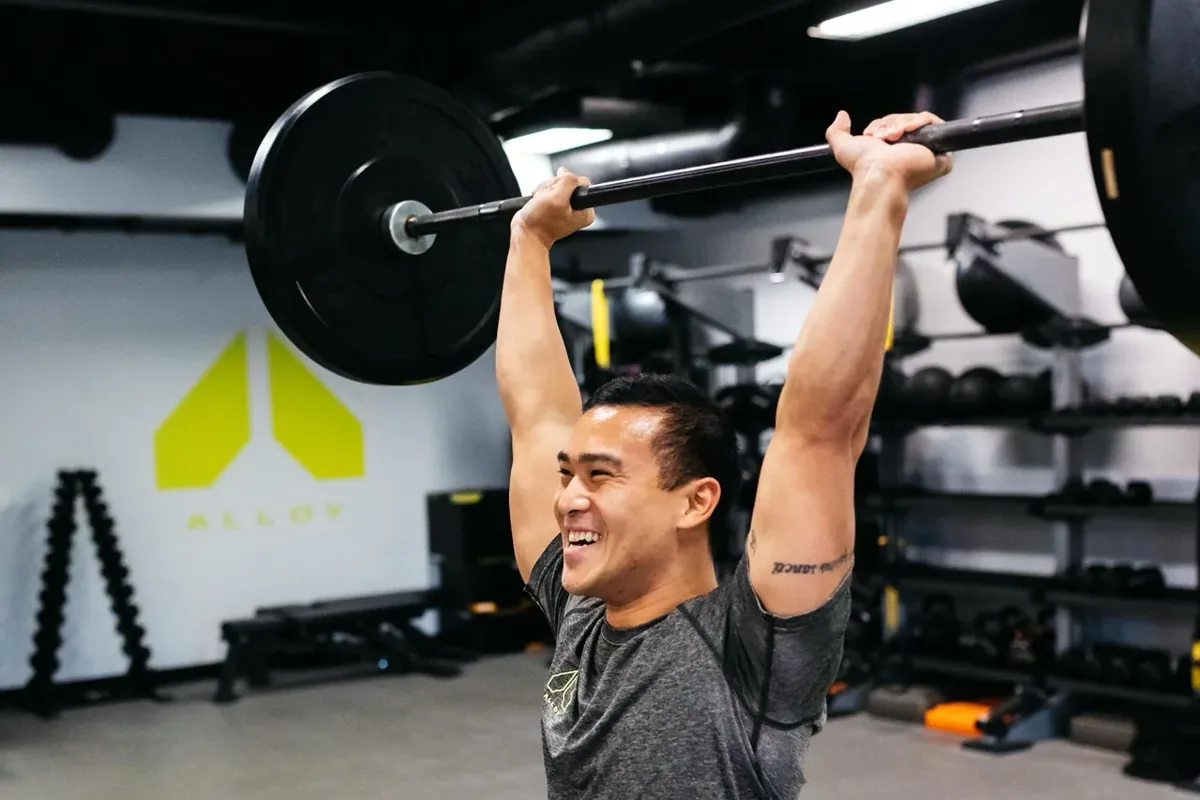
Which kind of gym fits which person?
It depends on what you need. Each option suits a different kind of person.
- Big-box and open-floor gyms suit people who already know how to program their own training, want lots of equipment and long hours, and will show up without anyone expecting them.
- Group fitness classes suit people who want energy, music, and a set time, and who don't need their form checked on every rep. One instructor leading a big room can't individualize much. For a closer comparison, see small group training vs. group fitness classes.
- Coached small group training suits adults who want structured strength work with a coach watching closely, plus a small room of people who notice when they're gone.
Then be practical about the drive. A gym that fits your commute tends to get used. If you're coming from Verona, Fitchburg, Cross Plains, or Waunakee, drive the route at the hour you'd actually train before you commit.
How does our studio hold up against the same list?
Here's how we answer those questions. Every new member at Alloy Personal Training Middleton starts with a strength and mobility assessment before any programming, and your joint history shapes the plan from the first assessment.
Training happens in scheduled sessions capped at six members, coach-led start to finish and about 50 minutes long. Every exercise is progressed or modified for the person doing it, and coaches know every member by name, so a missed week gets noticed. The InBody scan, taken at your first session and then monthly, measures muscle mass, body fat percentage, and water balance, so progress is something you can see. Most members notice improvements in energy, strength, and confidence within the first few weeks; body-composition change typically shows over 8–12 weeks.
Members range from their 40s into their 70s, and the studio is rated 4.9 on Google. You can read what members say on our testimonials page or see how small group personal training works here. On credentials, ask us the same question you'd ask anyone else.
How do you start?
Tour two or three places with this list and notice who gives the most specific answers. Then put us through the same test. Get Your Complimentary VIP Session at our studio, 8333 Greenway Blvd, Suite 140, just off the Beltline on Middleton's west side. It includes a strength and mobility assessment, an InBody scan, a goal-setting conversation, a customized fitness plan, and a small group training preview, with no pressure and no obligation. If you'd like the details first, here's what to expect at your complimentary VIP Session.