
If you cross-country ski or snowshoe in Wisconsin, the most useful thing you can do before the season is to start a structured strength block in mid-October and train your upper body and trunk as seriously as your legs. The usual pre-season plan for a lot of skiers over 40 is to walk more. Walking is good for you, but it trains only your legs, and in cross-country skiing your poles are half your engine. Snow is still weeks away, and that is the point: eight weeks of coached, progressive strength work now means your body is ready when the trails are, instead of spending January catching up.
Why is cross-country skiing secretly a strength sport?
Because a large share of the propulsion comes from your upper body. In a 2016 study in Medicine & Science in Sports & Exercise, elite skiers double poling on a 5% incline generated 63% of their external power with their arms, and 54% on a 12% incline. And in double poling, everything your legs and trunk add still reaches the snow through the poles.
Those were elite athletes using one technique, so the exact split is theirs. The direction is what matters, and other research backs it up. A 2019 study titled “Stronger Is Better” found that stronger skiers produced higher peak pole forces at a lower poling frequency. Bigger pushes, fewer of them.
If walking is your whole pre-season, your lats, triceps, and trunk start the winter no stronger than they ended last season. When the first long ski of the year leaves your shoulders and lower back more tired than your legs, that is the gap showing.
Does strength training actually make skiers better?
In trained skiers, the evidence says yes. A 1999 randomized trial by Hoff, Helgerud, and Wisløff followed 15 trained female cross-country skiers. The group that added maximal strength training significantly improved double-poling economy, meaning the same poling cost them less energy.
A 2018 study by Øfsteng and colleagues in the Scandinavian Journal of Medicine & Science in Sports found that eight weeks of added heavy strength training improved double-poling performance in well-trained male skiers, including time to exhaustion after 90 minutes of prolonged exercise, compared with endurance training alone. That last detail matters if you ski for hours, because it measured what was left in the tank after a long effort.
The honest caveat: this research is on trained and elite skiers, not recreational skiers over 40, so read it as a clear signal rather than a promise. The sport asks the same of your arms and trunk at any age, though. If you also run or ride in the warmer months, the same logic applies; we made that case in strength training for runners and cyclists over 40.
How much work is snowshoeing, really?
More than it looks. The 2024 Adult Compendium of Physical Activities rates moderate snowshoeing at 5.3 METs and vigorous snowshoeing at 10.0 METs. One MET is about the energy you use sitting still. For a 180-pound adult, those values work out to roughly 455 and 855 calories an hour. Treat those as our estimates from the Compendium values, not measurements; your own numbers depend on the snow, the terrain, and your pace.
Cross-country skiing spans a similar range and goes higher. The Compendium lists slow ski walking (2.5 mph) at 6.8 METs, general skiing (4.0–4.9 mph) at 8.5 METs, brisk skiing (5.0–7.9 mph) at 11.3 METs, and skate technique at 13.3 METs.
Snowshoeing asks less of your upper body unless you use poles, but it loads your hips and legs with a high, deliberate step on uneven footing. Both sports reward the same foundation: strong hips, solid single-leg strength, and a trunk that keeps you balanced.
What should an eight-week pre-season plan include?
Five kinds of work, built up gradually. Start in mid-October and you have roughly eight to ten weeks before late-December snow, which lines up with the eight-week block in the 2018 study above.
- Hinges. Deadlift variations and hip bridges build the hips and the backs of the legs, which power every climb and every kick.
- Single-leg work. Split squats, step-ups, and lateral lunges, because skiing and snowshoeing happen one leg at a time. The lateral work matters most for skate skiers, who push off to the side.
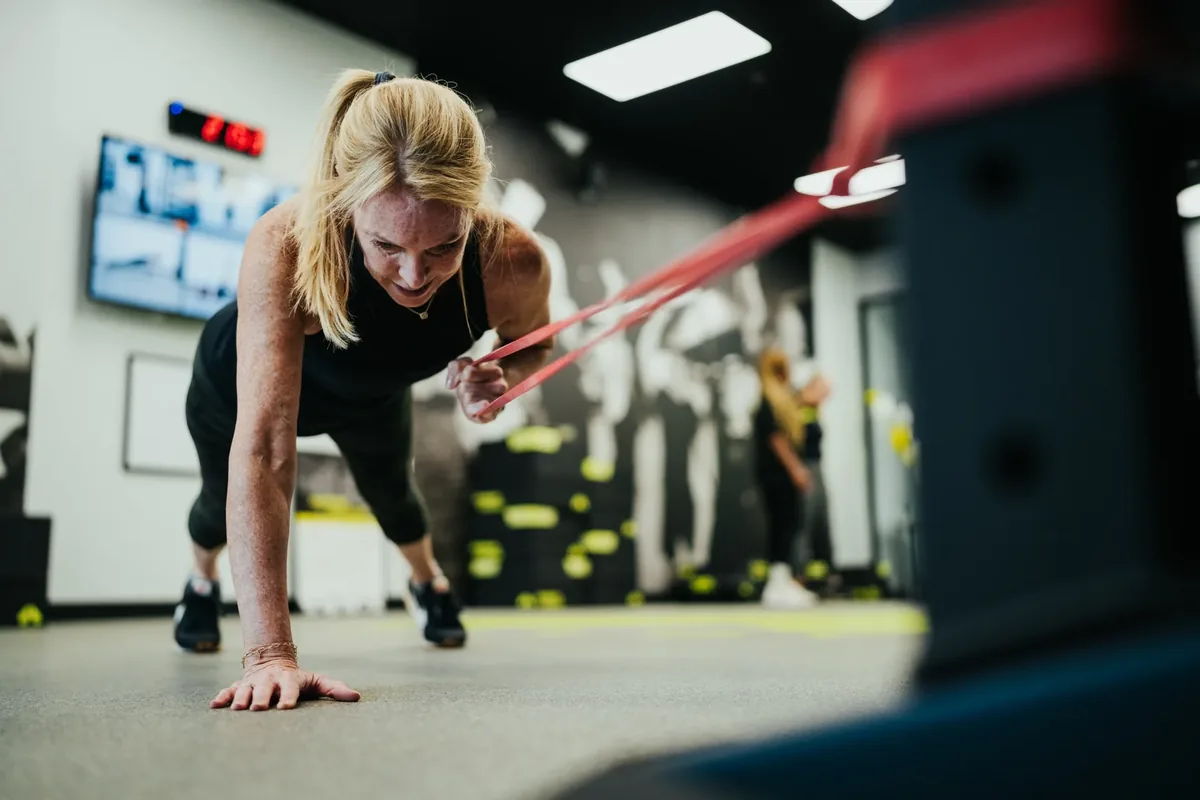
- Upper-body pull and push. Rows, pulldowns, and straight-arm pulldowns train the pull of each pole stroke; presses and push-ups train the push at the finish and keep your shoulders balanced.
- Anti-rotation core. Pallof presses, loaded carries, and dead bugs teach your trunk to resist twisting, so force from your arms and hips reaches the poles and skis instead of leaking out.
- Balance. Single-leg holds and slow step-downs build the steadiness a narrow ski, a shifting snowshoe, or a rutted downhill asks for.
In the first two weeks, your coach teaches the patterns at moderate loads. In weeks three through six, the loads go up in planned steps. In the last two weeks, strength stays high while total volume eases slightly, so you head into the heart of the season fresh rather than sore.
None of this injury-proofs you, and the research has not shown that pre-season strength training prevents injuries in recreational skiers over 40. What a block like this does is build the base the sport demands: legs for the climbs, arms and core for the poling, and balance for the downhills. That balance work is useful off the trail, too, on an icy driveway in January.
Key Takeaway
Cross-country skiing is a strength sport in disguise. In elite skiers double poling, the arms supplied 54–63% of the propulsive power, and studies in trained skiers link added strength training to better economy and performance, with one showing gains in eight weeks. Walking alone leaves that half of the engine untrained. A mid-October block of hinges, single-leg work, upper-body pull and push, anti-rotation core, and balance, coached and progressed gradually, builds the base the sport demands before the season arrives.
Where can you put that strength to work this winter?
The Madison-area Nordic scene is the real thing, and it makes a natural ladder from first steps to a someday goal.
- Snowshoe anywhere. Snowshoes need no groomed trail, just snow, which makes them the easiest first rung once winter arrives.
- Elver Park after work. On Madison's west side, Elver Park has about 10 km of groomed trail for classic and skate skiing, with the west loop lit from dusk to 10 p.m. The city requires a ski permit for anyone 16 and older, and rentals are available at the warming pavilion.
- Pleasant View in Middleton. Pleasant View Golf Course has about 8 miles of groomed natural-snow trails and is part of the CXC Trail System. Snowmaking stretches the season on the CXC loop to roughly mid-November through mid-April, which can put you on skis before your eight-week block is even finished. A ski pass is required. Nearby, the membership-based Blackhawk Ski Club runs lit, snowmade trails for its members that connect to Pleasant View.
- Someday, the Birkie. The American Birkebeiner, which calls itself North America's largest cross-country ski marathon, runs 50K skate or 53K classic from Cable to Hayward, Wisconsin. The next one is Saturday, February 27, 2027. It does not have to be this season's goal, but it is a good reason to start now.
Why train for it in a coached small group?
Because the research used heavy strength training in trained skiers, and heavy lifting is not something to self-program if you have not lifted in years. For most adults 40 and over, heavy is a destination, not a starting point. Getting there takes someone watching the reps, choosing the loads, and adjusting when a knee or shoulder objects.
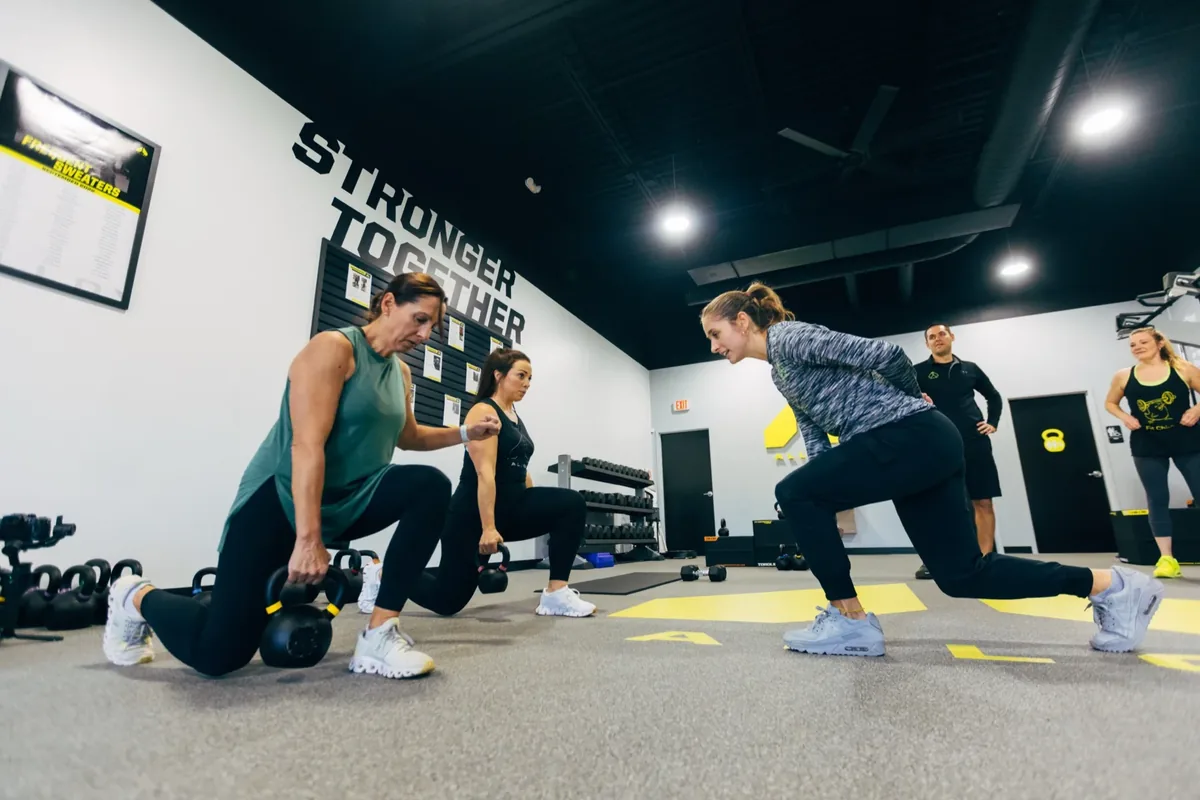
At Alloy Personal Training Middleton, sessions are capped at six members, coach-led start to finish, and about 50 minutes long. Your coach knows your name and your winter plans, progresses or modifies every exercise for you, and retests your strength along the way. An InBody scan at your first session, repeated monthly, measures muscle mass, body fat percentage, and water balance.
Most members notice improvements in energy, strength, and confidence within the first few weeks. Body-composition change typically shows over eight to twelve weeks, and long-term results come from consistency. A ski season on the calendar is a good reason to stay consistent. You can read more about how we approach strength training for adults over 40.
How do you start before the snow flies?
Book the assessment soon, while there is time for a full block before the season gets going. Get Your Complimentary VIP Session at our studio at 8333 Greenway Blvd, Suite 140, just off the Beltline on Middleton's west side. Your first session is free and includes a strength and mobility assessment, an InBody scan, a goal-setting conversation, a customized fitness plan, and a preview of small group training. No pressure, no obligation.
The studio serves Middleton, West Madison, Verona, Fitchburg, Cross Plains, and Waunakee. Come in with your ski or snowshoe goals, and leave with a plan that gets you ready for them.