
The first thing to know before you start at a gym after 40 is that feeling nervous is normal, and it has been measured: a January 2025 survey of 1,000+ adults found gym anxiety peaks at ages 45–60. The rest is mostly good news. In a study of 100,709 new lifters, beginners 51 and older stuck with training better than those aged 18 to 30. The first month tends to go better than people expect, and easing in beats going hard on day one. Here is what the research says about starting from zero, and what your first weeks look like in a coached group capped at six.
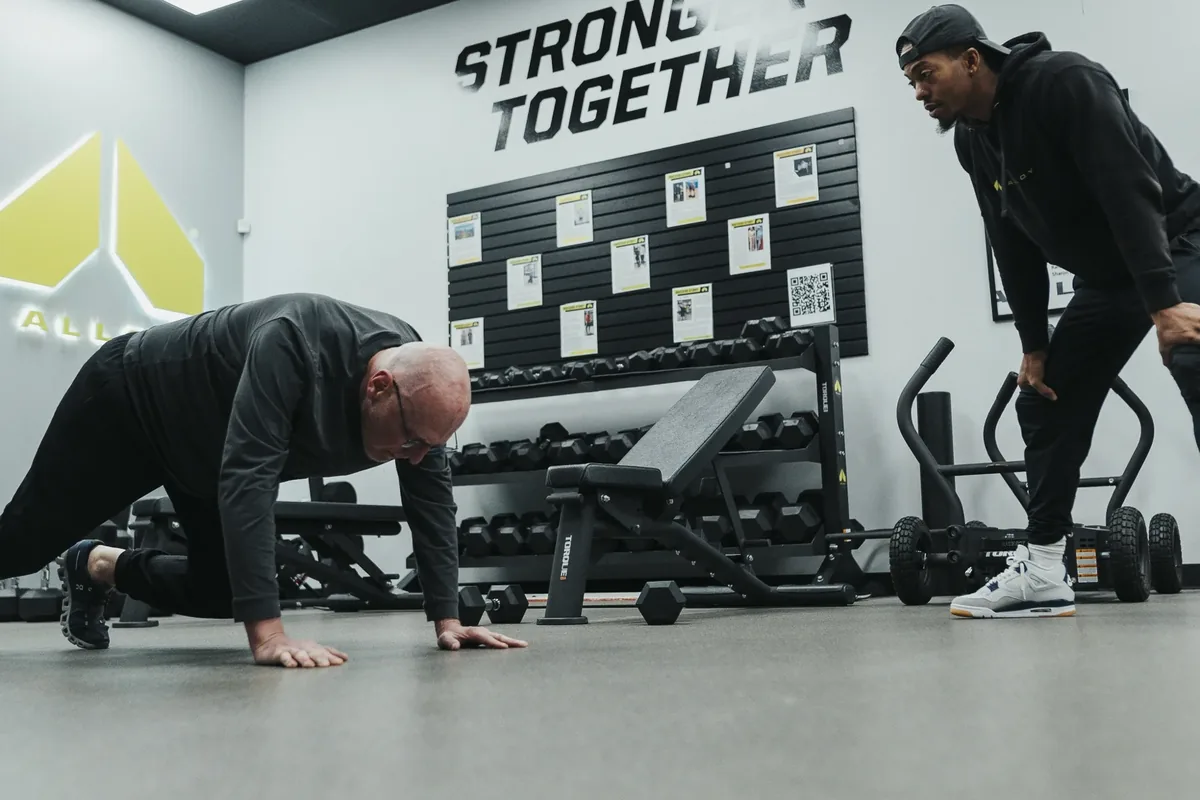
Why does walking into a gym feel so intimidating after 40?
Because a typical gym floor assumes you already know what you're doing, and you feel that the moment you walk in. The same January 2025 survey found that over 40% of U.S. adults avoid working out because of gym anxiety, and nearly 50% report feeling watched or criticized at the gym. The second-biggest driver was a lack of knowledge and confidence with the equipment.
That reaction makes sense. By your 40s you're competent in most rooms you walk into; a floor of unfamiliar equipment is one of the few that can make a capable adult feel like a rookie.
A few things help. The feeling of being watched is mostly a feeling, and in most gyms people are busy counting their own reps. Everyone you'll ever train next to had a first day, including the people who look like they were born knowing how to deadlift. And in a coached room, the equipment problem goes away: someone shows you every exercise, and the one person watching you closely is your coach, whose job is to get the rep right.
If you trained seriously years ago and are coming back, your challenge is different, usually too much intensity too soon, and we cover it in getting back in shape after 50 as a former athlete. This post is for people starting from scratch.
Is it too late to start lifting in your 40s or 50s?
No, and the data point the other way. An August 2026 study in Frontiers in Sports and Active Living looked at 100,709 beginner lifters and found that only 10.1% were still sticking with their training at 12 months. Adherence rose with age, in fact. Among beginners 51 and older, 13.31% were still at it a year in, compared with 8.37% of beginners aged 18 to 30.
Neither number is high, and the sections below get into what helps. But the stereotype runs backward: in this data, starting later went with better follow-through, not worse. People who start in their 40s or 50s often bring a specific reason for training, a schedule they've learned to manage, and very little interest in impressing anyone.
Why does the first month tend to feel so encouraging?
Because early strength gains come quickly, and they come mostly from your nervous system. A 2025 paper in Frontiers in Physiology notes that initial strength gains are "typically evident after 4 weeks of resistance training" and are "primarily attributed to neural modifications." In plain terms, your nervous system gets more efficient at using the muscle you already have, well before the muscle itself visibly changes.
Research in newer lifters suggests noticeable strength gains within about 4–8 weeks. Some of that research involved younger adults, so treat the timeline as a guide, not a promise. The broader pattern holds across studies, though: a 2025 meta-analysis in Scientific Reports pooled 24 studies and 587 participants and found resistance training produced significant gains in maximal strength in untrained people, across programs lasting 4 to 14 weeks.
That matters, because early progress, like a weight moving more easily than it did two weeks ago, makes it easier to keep showing up. Most of our members notice improvements in energy, strength, and confidence within the first few weeks. Body composition changes take longer and typically show over 8 to 12 weeks.
Why does easing in beat going hard on day one?
Because the goal of your first weeks is to still be training in month six, and too much too soon tends to end in soreness, a tweak, or both. The federal Physical Activity Guidelines for Americans advise inactive people to "start low and go slow," increasing gradually over weeks to months to reduce injury risk. Some activity beats none, the guidelines add, so if you already walk the Pheasant Branch trails, keep at it.
The dropout numbers show why the early weeks carry so much weight. A 2021 study in the peer-reviewed Revista Brasileira de Ciências do Esporte looked at 3,802 members at two gyms and found that 47–54% of new members quit within the first 3 months, and 63–70% had quit by 6 months. Members who came at least seven times a month stuck around far better. And in the 2026 study of 100,709 beginners, the median dropout came at 19 weeks, and the strongest predictor of lasting was early training consistency.
Put together, that's a clear brief for a new lifter: show up regularly, finish each session ready for the next one, and let the weights climb on a plan instead of on adrenaline. The typical gym model leaves all of that up to you. A coached ramp is built for exactly the stretch when so many new members disappear.
What do the first weeks look like in a coached small group?
Structured, supervised, and deliberately unhurried. Here is how it works at Alloy Personal Training Middleton, starting with the complimentary VIP Session:
- Before you join. You sit down with a coach for a goal-setting conversation, a strength and mobility assessment, and your first InBody scan, which measures muscle mass, body fat percentage, and water balance. You leave with a customized fitness plan and a preview of small group training. Your first session is free, with no pressure and no obligation.
- Your first sessions. Groups are capped at six members, coach-led start to finish, and about 50 minutes long. Your coach teaches the foundational patterns, such as squatting, hinging, pushing, and pulling, and chooses your starting loads. You never have to figure out a piece of equipment on your own, which answers the second-biggest driver of gym anxiety head-on.
- The rest of the first month. The same patterns, repeated until they feel familiar. When your form is ready, your coach adds a little load or a harder variation. Every exercise is progressed or modified for you, so the person beside you may be doing a different version of the same movement. You can read more about how small group training is individualized.
- Month two and beyond. Loads go up in planned steps, your progress is tracked, and your InBody scan repeats monthly, so you see change in numbers instead of guessing at it.
If you're managing a health condition, talk with your physician first; we build around their guidance.
Key Takeaway
Feeling intimidated before you start at a gym after 40 is common, and one January 2025 survey found gym anxiety peaks at ages 45–60. It doesn't mean you're late: in a study of 100,709 beginners, those 51 and older stuck with training better than those aged 18 to 30. The first month tends to reward you quickly, mostly through nervous-system gains. What decides the rest is easing in and showing up consistently, which a coached group capped at six is built to support.
What keeps a beginner coming back?
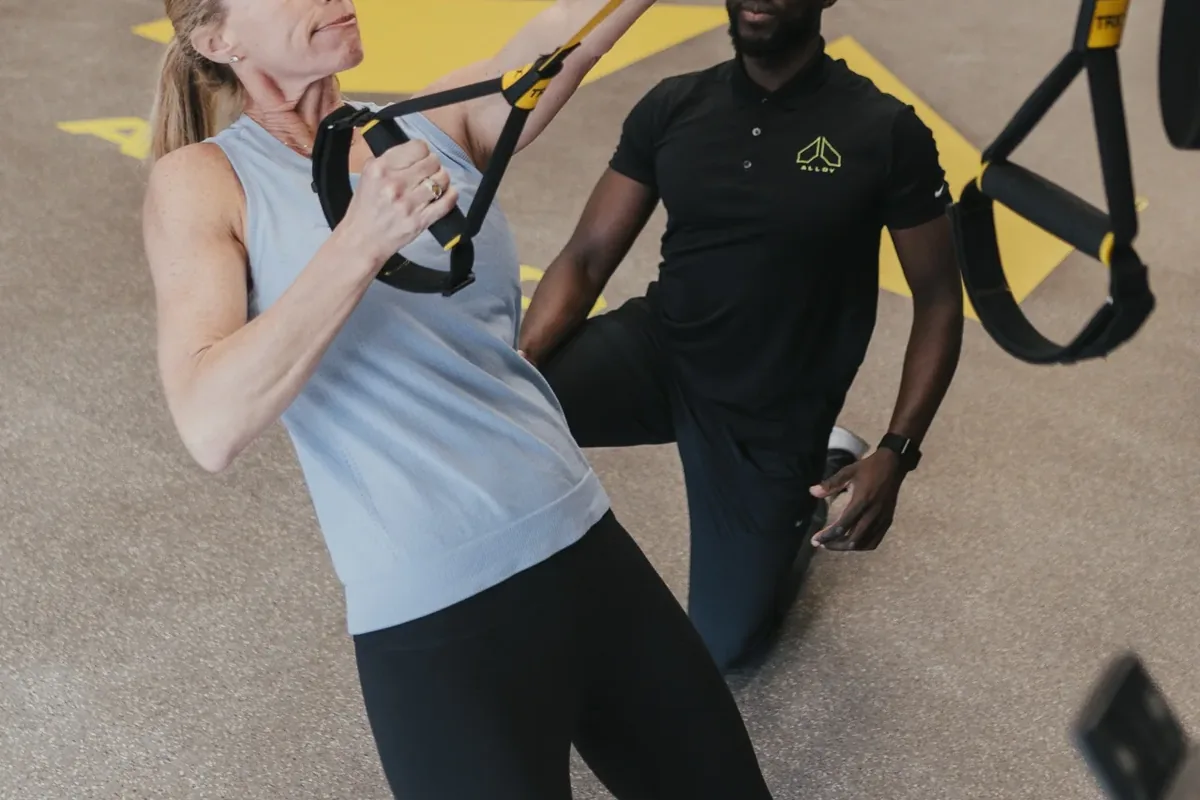
Enjoyment first, then confidence and support. A 2021 study in Frontiers in Psychology followed 250 novice exercisers for a year and found enjoyment was the strongest predictor of sticking with it (odds ratio 1.84), followed by self-efficacy, or confidence in your own ability (1.73), and social support (1.16). It also found a telling gap: 86.6% kept their membership, but only 17% stayed regular at every checkpoint. Paying for a gym and using one are two different things.
A small coached group is built around all three. Sessions are easier to enjoy when they're planned for you and you know what you're doing. Confidence grows each time you finish a lift you weren't sure about. And support comes with the format: no more than six adults 40 and over in the room, and a coach who knows every member by name.
How do you start?
Book the assessment and let a coach pick your starting point, so there's no guessing on day one. Get Your Complimentary VIP Session at our studio at 8333 Greenway Blvd, Suite 140, just off the Beltline on Middleton's west side, an easy trip from West Madison, Verona, Fitchburg, Cross Plains, and Waunakee. You'll leave with an InBody baseline, a clear read on how you move today, and a customized plan that starts where you are, not where you think you should be. To know exactly what happens at that first visit, read what to expect at your complimentary VIP Session.