
How long you need a personal trainer depends on what you want the trainer for. If the goal is to learn the movements and how to progress them, three to six months of coached training gets most people there. If the goal is to build a genuine base of strength after 40, plan on a year. And if what you actually want is a structure that keeps you training for the next thirty years, the honest answer is that the coaching relationship is the product, not a phase you graduate from. Here is how to think about it, from a studio whose members fall into all three groups.
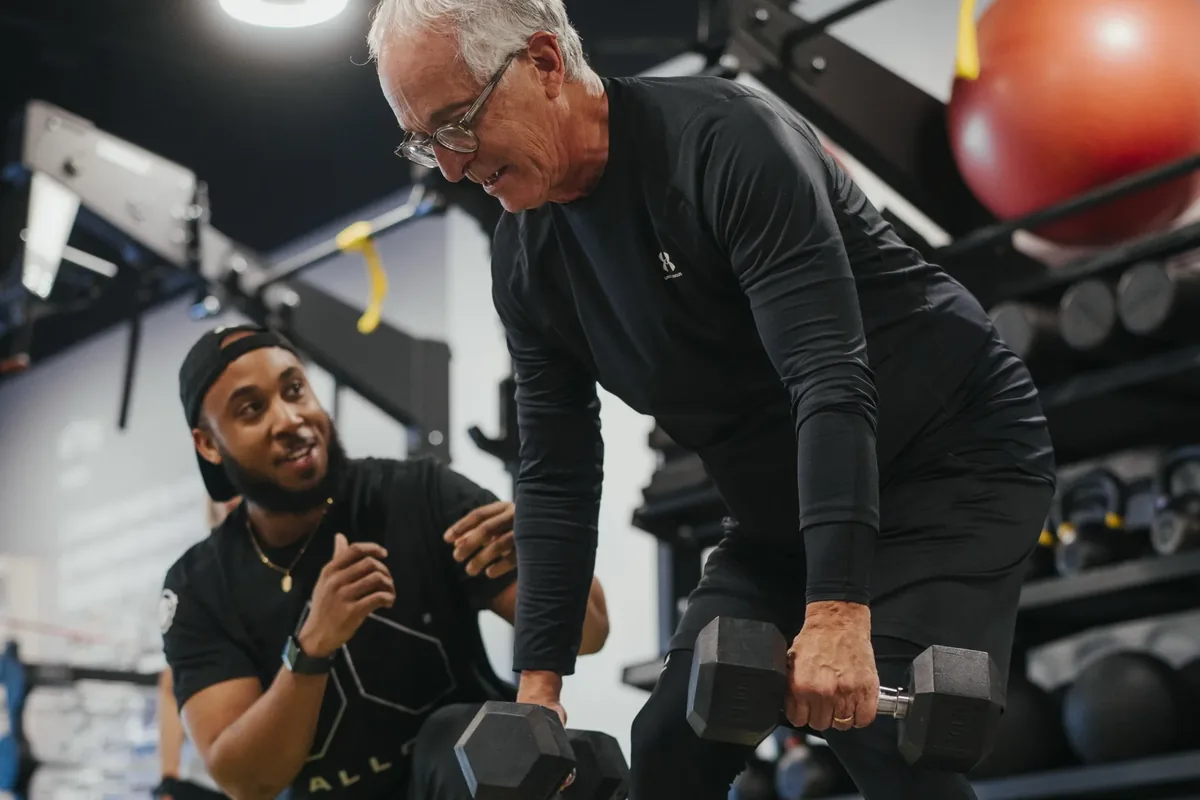
What are you hiring a trainer to do?
Three different jobs hide inside the word "trainer," and they have three different timelines:
- Teach you. Show you the basic patterns, correct your form, and explain how to make the work harder over time. This is a skill, and like any skill it can be learned.
- Build you. Take you from where you are to a real base of strength and capability through a planned, progressive program. This takes longer than people expect and shorter than they fear.
- Keep you. Provide the schedule, the measurement, and the room full of people who notice when you are missing. This is the job most adults over 40 actually need, and it does not have an end date.
Most people who ask "how long do I need a trainer" are picturing the first job and pricing out the second. What they end up valuing most, months later, is the third.
How long does it take to learn the movements?
Three to six months, for most people. In coached sessions two or three times a week, the basic patterns become familiar within weeks: a squat, a hinge, a push, a pull, a carry, and the single-leg work that holds them together. Within a few months, most members know what good form feels like, understand why the loads go up when they do, and could walk into a gym and run a sensible session on their own.
That is a real milestone and we are glad when members hit it. It is also where the honest conversation starts, because knowing how to train and actually training three mornings a week are two very different things.
How long does it take to build a real base?
About a year of consistent training. Most members notice improvements in energy, strength, and confidence within the first few weeks. Body composition changes typically show on the monthly InBody scan over eight to twelve weeks. But the deeper change, the kind where stairs and luggage and a full day of yard work stop being things you think about, comes from stacking consistent months on top of each other.
At Alloy Personal Training Middleton, programs run in structured blocks that build on each other, and the monthly InBody scan plus retested strength benchmarks tell your coach what to keep and what to change. A year of that produces a base that is very hard to lose, and very hard to build any other way.
Do you need a trainer forever?
No, and most people keep one anyway. Here is the honest version. Our longest-tenured members could absolutely train on their own. They have the skills and they have the base. They keep training here because the coached version is simply better: the program keeps progressing without them having to think about it, someone is still watching their form on a heavy set, the InBody scan still shows them what is changing, and at 6 a.m. on a January Tuesday, there are five other people expecting them.
That is not dependence. It is the same reason a good golfer keeps a coach and a serious musician keeps a teacher. The structure is the thing you are paying for, and it does not stop being valuable once you are capable.
Key Takeaway
You need a personal trainer for as long as you want what the coaching provides. Three to six months to learn the movements, about a year to build a real base, and indefinitely if what keeps you training is a program that progresses, a coach watching your form, monthly measurement, and a room that expects you. For most adults over 40, that last one is the real answer.
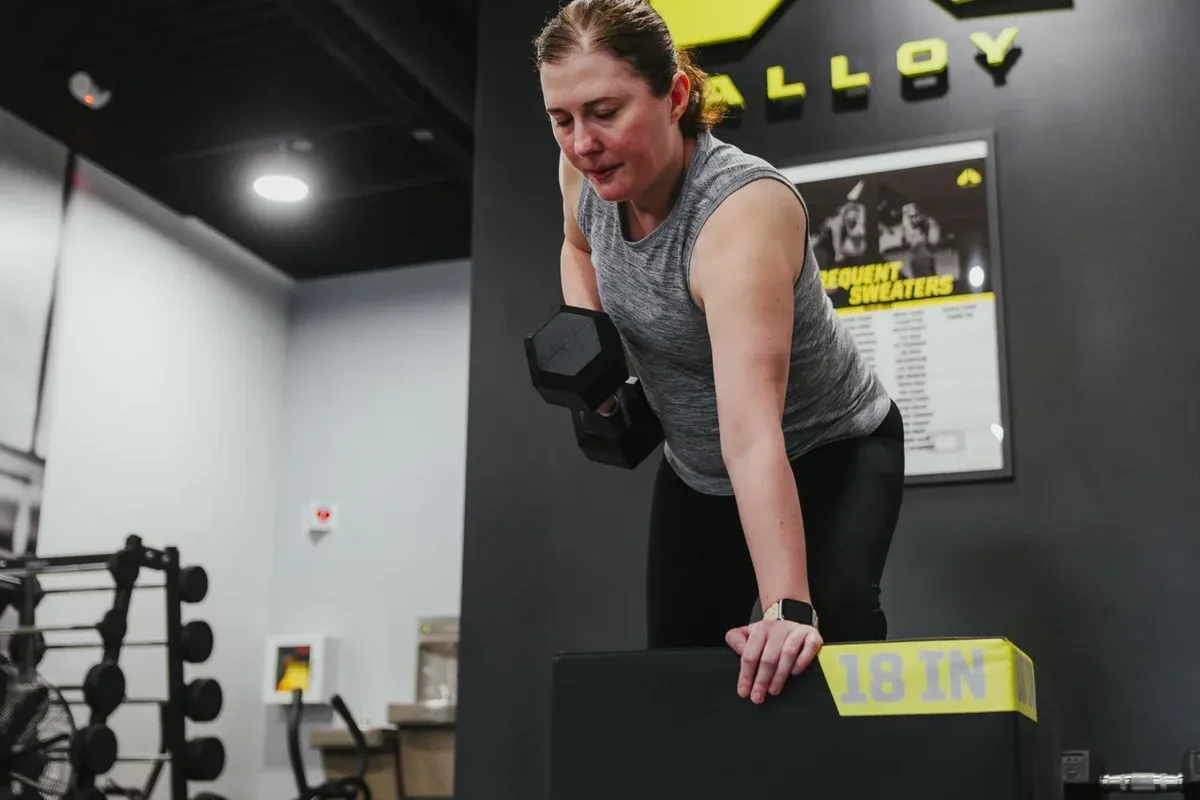
What does a good studio do when you are ready to go it alone?
Say so. A studio confident in its coaching has no reason to keep a member who would genuinely be better served training independently, and we have had that conversation. A program built on an honest assessment should produce honest advice at every stage, including "you've got this."
What we see more often is the opposite: members who planned on six months, hit the skill milestone, tried the big-gym version for a while, and came back. Not because they forgot how to train, but because the room, the coach, and the measurement were what made the training happen. Coming back is easy. A fresh assessment, an InBody rescan, and the program restarts from where you actually are.
How should you decide?
Decide what you are hiring for, then decide at the end of the first block, not before the first session. Commit to two or three coached sessions a week for a few months, let the InBody scans and the benchmarks tell you what changed, and then ask yourself the only question that matters: am I more likely to keep training with this structure, or without it? For most people the answer is obvious by then.
Every membership at Alloy Middleton begins with a complimentary VIP Session: a conversation about your goals, an InBody scan, a strength and mobility assessment, and a small group training preview, followed by a customized plan and straightforward pricing. Get Your Complimentary VIP Session at 8333 Greenway Blvd, Suite 140, just off the Beltline on Middleton's west side. You can read more about how the coaching works on our services page.