
Small group personal training is worth it when it buys you four things a gym membership cannot: a program built for your body, a coach watching your form every session, measurement that proves what is changing, and a schedule with your name on it. If you are getting all four, the money is well spent. If you are getting a hard hour and a high five, it is not. This post lays out how to judge the value honestly, including the three situations where we would tell you it is not the right fit.
What are you actually paying for?
Not access. A gym membership sells access to equipment, and in the Middleton area you can get that for the price of a few coffees a month. Small group personal training sells something different: the attention of a professional coach, spread across a room capped at six people, applied to a program that was built for you.
Put plainly, you are paying for someone to know what you should do, watch you do it, fix it when it drifts, and notice when you do not show up. That is the entire product. Equipment is incidental.
What makes it worth the money?
Four things, and a studio that is worth paying for delivers all of them:
- A program built from an assessment. Before any workout, a coach should know your goals, your history, how you move, and your body composition baseline. At Alloy Personal Training Middleton that is the complimentary VIP Session, and it is the reason your first real session is already yours rather than somebody else's.
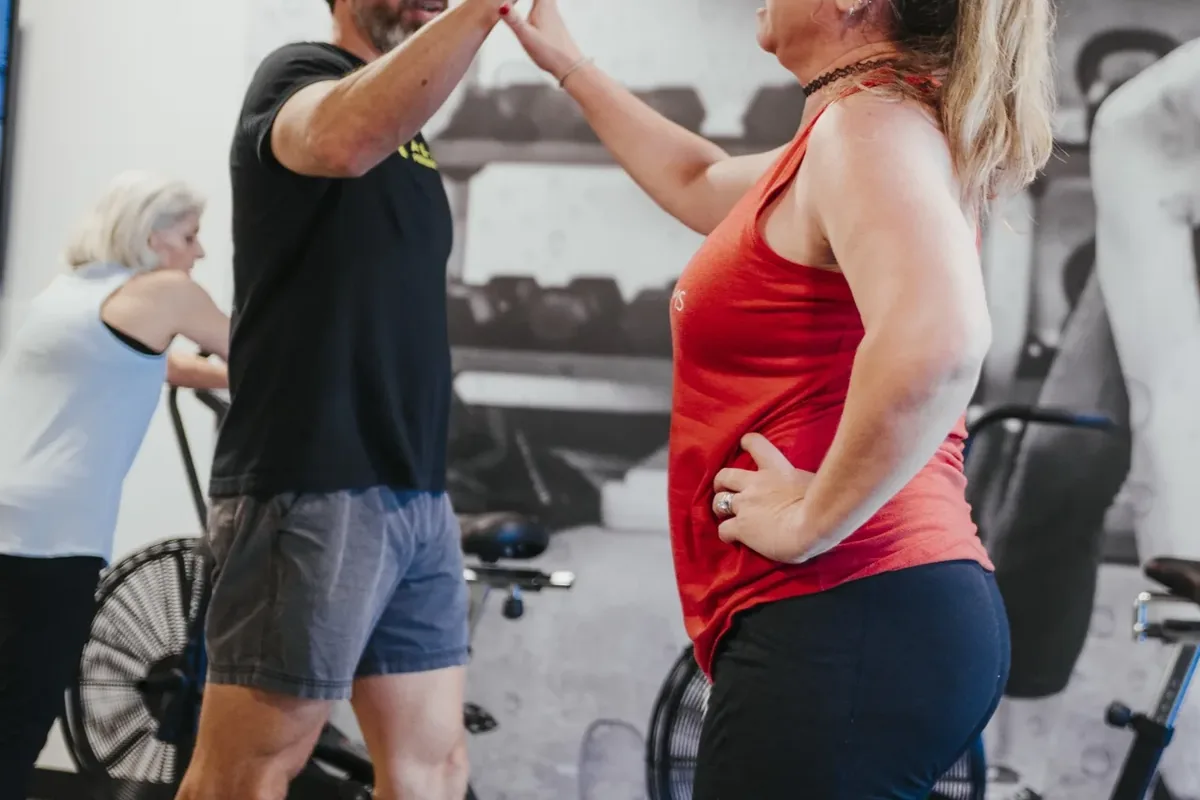
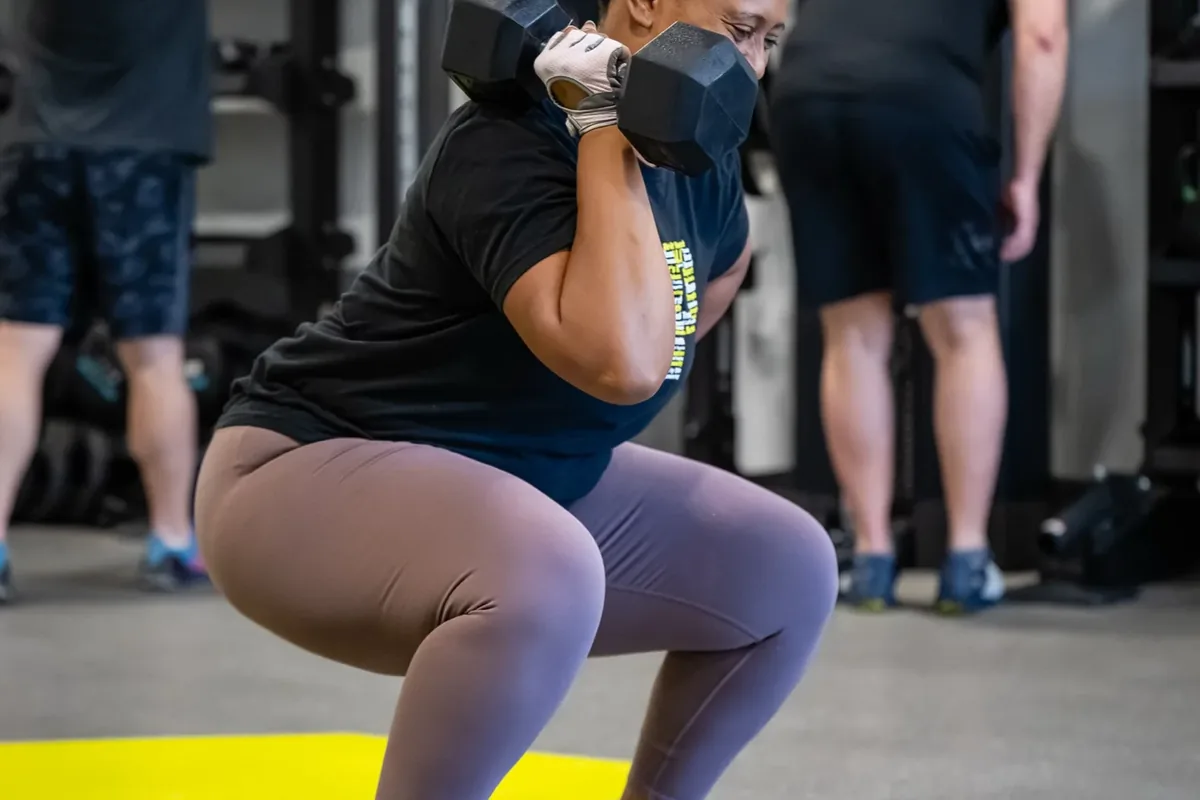
- Eyes on your form, every session. Attention is the product. Sessions here are capped at six, which is the number where a coach can still see every rep. If a studio will not tell you how many people a coach watches at once, assume it is more than six.
- Measurement on a schedule. Progress should be visible even in the weeks the mirror is quiet. Every member scans monthly on the InBody, and strength benchmarks get retested, so muscle mass and body fat percentage are tracked lines rather than impressions.
- A schedule that expects you. Sessions at a set time, with a coach and five other people who learn your name, do more for consistency than any surge of January motivation. Open-ended gym access mostly produces good intentions.
How does the math compare to one-on-one training?
One-on-one training delivers the coaching and usually prices most people down to a single session a week, which is the frequency where results are slowest. Small group training shares the coach across six members, which brings the cost to a level where two or three sessions a week becomes realistic.
Frequency is where results live. Three coached sessions a week in a group of six will outperform one private session a week for almost everyone whose goal is to get stronger, leaner, and more capable. The private hour is the right choice for specific rehab situations or sport-specific work, and we will say so if that is you.
What does "results" actually mean?
Honestly: most members notice improvements in energy, strength, and confidence within the first few weeks of consistent training. Body composition changes typically show on the InBody over eight to twelve weeks. Long-term results come from consistency over months and years, which is exactly the thing the format is designed to produce.
Just as telling is what members report outside the studio. Stairs that stopped being a consideration. A full Saturday of yard work without a two-day recovery tax. A suitcase lifted overhead without a plan. Our members say it better than we can, and it is the reason the studio sits at 4.9 on Google with more than a hundred reviews.
Key Takeaway
Small group personal training is worth it when you get a program built from an assessment, a coach watching your form every session, measurement on a schedule, and a room that expects you by name. Judge any studio on those four. If you get all of them, the investment pays; if you get a hard workout and nothing else, keep looking.
When is it not worth it?
Three situations, and we would rather tell you now than after you join:
- You already train well on your own and reliably do it. If you know what to do in a gym and you do it, a membership is all you need. Coaching is for people who want a plan and accountability, not for people who already have both.
- You need a coach's undivided attention. A specific post-injury rehab phase or a sport-specific block sometimes calls for one-on-one work. We will say so at your Complimentary VIP Session.
- You cannot commit to two sessions a week. One session a week is better than none, but the value of coached training compounds with frequency. If your schedule genuinely cannot hold two sessions, the honest answer is to wait until it can.
How do you judge a studio before you pay?
Visit, and run the four-point check. Ask how many people a coach watches at once. Ask what happens before your first workout, and walk away if the answer is "we'll get you started Monday." Ask how progress is measured, and listen for specifics. Ask to see or try a session. A studio confident in its coaching will say yes without hesitating.
You can run that check on us. Every membership at Alloy Middleton starts with a complimentary VIP Session: a conversation about your goals and history, an InBody scan, a strength and mobility assessment, and a small group training preview, followed by a customized plan and straightforward pricing. Get Your Complimentary VIP Session at 8333 Greenway Blvd, Suite 140, just off the Beltline on Middleton's west side, and decide for yourself whether the four things are there. You can read how the format works on our small group personal training page first.