
Strength training helps lower injury risk after 40 by making the tissues that absorb force (muscle, tendon, and bone) better at handling load. The research behind that is stronger than most people expect, with honest limits worth knowing: the most dramatic numbers come from studies of athletes, and the falls research supports strength plus balance, not strength alone. Here is what the studies found, who was in them, why lifting itself shows low injury rates in the research, and why supervision appears to be the factor that decides whether an injury-prevention program works at all.
What does the research say about strength training and injury risk?
The strongest evidence comes from sport, and it is striking. A 2014 meta-analysis in the British Journal of Sports Medicine pooled 25 randomized controlled trials covering 26,610 participants and 3,464 injuries. Strength training programs had a relative risk of 0.315, meaning injury risk fell to less than a third of what comparison groups experienced. Across the exercise programs studied, overuse injuries were nearly halved. Stretching alone, the warm-up ritual many of us grew up with, showed essentially no effect, with a relative risk of 0.963.
The same research group followed up in 2018 with a dose-response analysis, also in the British Journal of Sports Medicine, covering 6 studies and 7,738 participants. It found that "a 10% increase in strength training volume reduced the risk of injury by more than four percentage points." Because the two papers share authors, they are best read as one line of evidence reinforced by a follow-up, not two independent confirmations.
Now the caveat. The people in this research were athletes aged 12 to 40. Nobody should take the less-than-a-third figure and apply it directly to a 50-year-old who wants to garden, hike, and carry groceries without a sore back. What carries across ages is the physiology underneath: stronger muscle, tendon, and bone handle load better. If you run or ride on weekends, the athlete data sits a little closer to home, and our post on strength training for runners and cyclists over 40 covers that side.
How does lifting make muscle, tendon, and bone more resilient?
Tissue adapts to the load you give it. Muscle is the part everyone pictures, and it does real work around your joints: stronger hips, thighs, and shoulders help absorb force when you misjudge a curb or catch a heavy box on its way to the floor. Tendons and bone respond to training too, and they are the parts most people forget.
A 2015 meta-analysis of 27 studies in Sports Medicine Open looked at adults aged 18 to 50 who trained for at least eight weeks. Tendons became measurably stiffer and stronger, and the clearest changes came from high-load training sustained for 12 weeks or longer. Those studies stopped at age 50, so read the size of the effect with that in mind. The useful lesson is the timeline: tendon change rewards patience.
Bone follows the same rule. A 2025 meta-analysis of 17 randomized trials in the Journal of Orthopaedic Surgery and Research found that resistance training significantly improved bone mineral density at the lumbar spine and the femoral neck of the hip in postmenopausal women. That is support for bone health, not a promise about fractures.
Why does strength plus balance matter for the long game?
Because falls are the long-game injury risk, and the evidence on them is strong, with one important twist. An abridged Cochrane review by Sherrington and colleagues found that exercise reduced the rate of falls by 23%, a high-certainty finding. Balance and functional exercise reduced the rate by 24%, and programs totaling three or more hours a week reduced it by 42%.
The twist: resistance training on its own had an uncertain effect on falls, rated very-low certainty. The honest framing is strength plus balance, never strength alone. Strong legs still need practice catching your weight on one foot when the ground shifts, whether that means January ice on the Pheasant Branch trail or loose gravel on the Military Ridge trail.
Keep the population in mind, too. The participants' average age was 76, and most were women. That is not a snapshot of a 45-year-old reader today. It is a picture of where this road leads, and the decades before it are the time to build the strength and balance you will want then.
Won't lifting weights hurt me?
It is one of the most common worries we hear, and the research points the other way. A 2017 review by Keogh and Winwood in Sports Medicine examined injuries across the weight-training sports. Most studies reported about 2 to 4 injuries per 1,000 hours of training, and those were competitive lifters, people deliberately chasing maximal loads. Bodybuilding came in at 0.24 to 1 injury per 1,000 hours. Powerlifting landed around 1.0 to 1.1 per 1,000 hours in two of six studies. The higher rates came from strongman at 5.5 and Highland Games at 7.5, sports built around hoisting and throwing awkward objects.
In the authors' own words, the weight-training sports "appear to have lower rates of injury than many common team sports." They also flag the limits: these were competitive lifters, and the data came from retrospective designs, looking back at injuries after the fact rather than tracking them as they happened. Treat the figures as a rough guide, not a forecast for your own training. The direction is still clear: lifting with reasonable care is not the high-risk activity its reputation suggests.
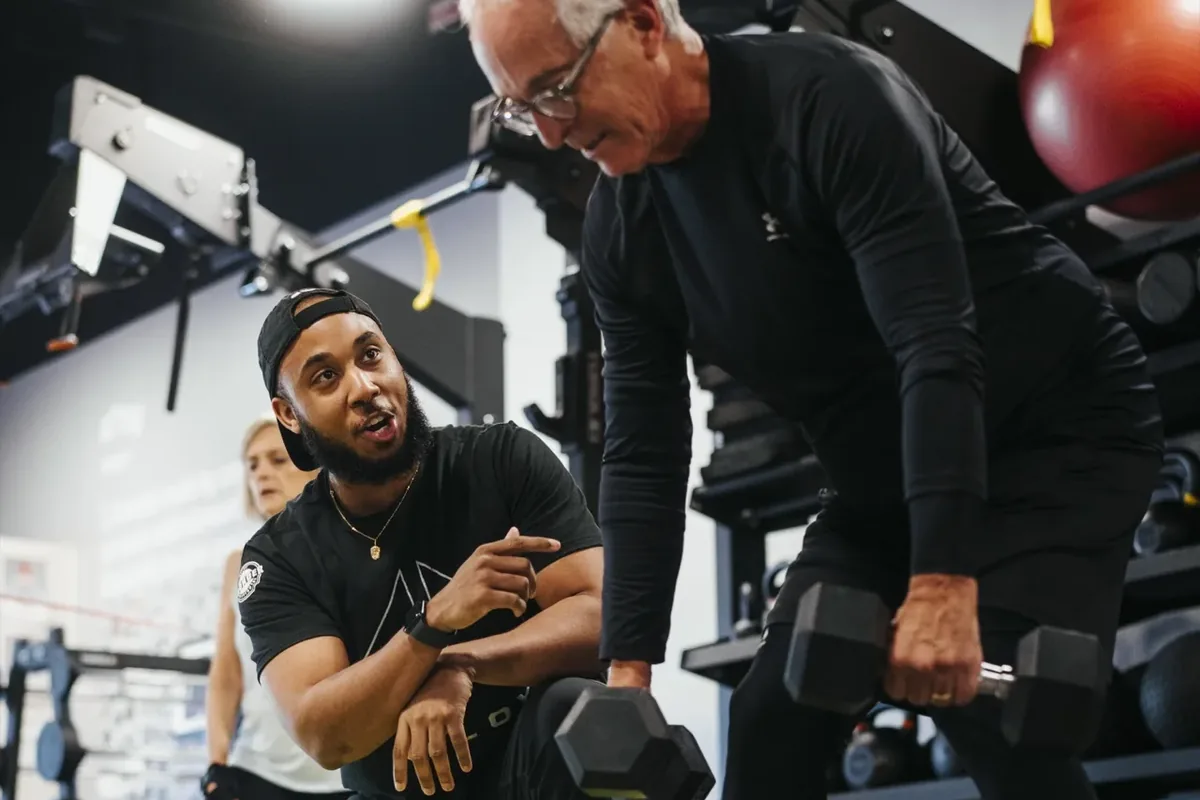
The bigger finding is about who is watching. A 2023 meta-analysis of 44 studies in Research in Sports Medicine compared supervised and unsupervised injury-prevention programs. Supervised programs were effective, with a risk ratio of 0.67, meaning participants carried roughly two-thirds the injury risk of comparison groups. Unsupervised programs were not effective: a risk ratio of 1.04, with no meaningful difference from comparison groups.
That split matches what coaches see every day. Form drifts on the last reps of a set. Weight goes up faster than the body is ready for. A cranky knee gets trained through because nobody asked about it. A coach in the room is there to catch those moments before they turn into the week-two injury that ends so many comebacks after 50.
Key Takeaway
Strength training helps reduce injury risk after 40 by making muscle, tendon, and bone better at handling load. The strongest numbers come from studies of athletes, so they show the direction rather than predict results at 50, and the falls research favors strength plus balance over strength alone. Lifting itself shows low injury rates, about 2 to 4 per 1,000 training hours in most studies of competitive lifters. Supervision appears to be the deciding factor: supervised prevention programs worked, and unsupervised ones did not.
What does coached, injury-aware training look like?
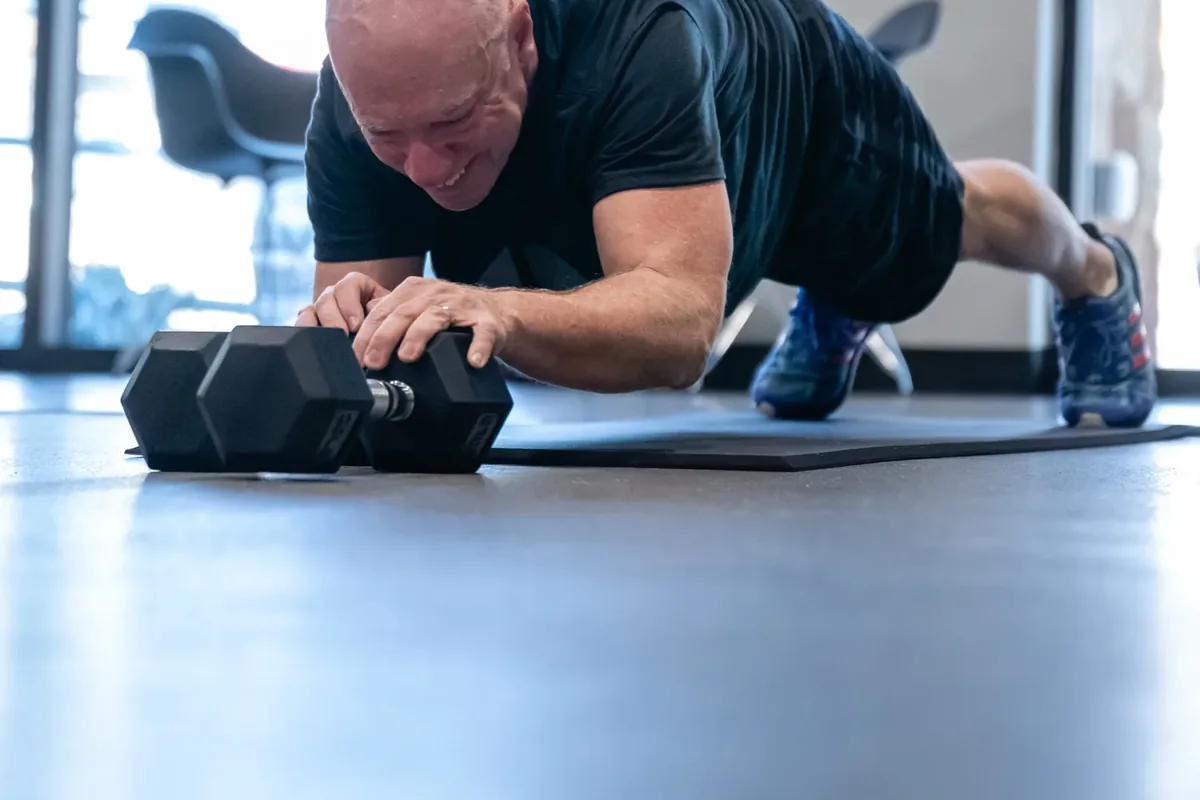
It starts with an assessment, not a workout. Your first visit is a complimentary VIP Session: a strength and mobility assessment where a coach watches how you move today, an InBody scan that measures muscle mass, body fat percentage, and water balance, and a goal-setting conversation that covers your history, including the old ankle sprain and the shoulder that complains when you reach overhead. That history shapes the customized plan you leave with.
From there, members at Alloy Personal Training Middleton train in small groups capped at six, coach-led start to finish, for about 50 minutes. Every exercise is progressed or modified for the person doing it, your coach can build in balance and single-leg work where your plan calls for it, and loads rise in planned steps so tendon and bone get the steady, sustained loading the research describes. The InBody scan repeats monthly, so changes in muscle mass show up as numbers instead of guesses.
The dose-response finding points to consistency over heroics: in athletes, more strength training volume was associated with lower injury risk. Most members notice improvements in energy, strength, and confidence within the first few weeks, while the tissue changes the studies describe typically take months of steady training. If you are managing a current injury or a medical condition, talk with your physician first; we build around their guidance.
How do you start?
Start by finding out where you stand today. Get Your Complimentary VIP Session at our studio at 8333 Greenway Blvd, Suite 140, just off the Beltline on Middleton's west side. You will get a small group training preview and leave with an InBody baseline, an honest read on how you move, and a customized plan built around your history, with no pressure and no obligation. If you want the details first, read how we approach strength training for adults over 40. You can see what training here feels like in our members' own words.