
One-on-one personal training around Middleton typically costs $35 to $90 an hour, the range Thumbtack's Madison-area pricing guide tells people to expect, which runs a little below national rates. Small group training usually lands below one-on-one per session, and gym memberships cost less still, at least on paper. The sticker price is only part of the picture. What you really pay is the monthly cost divided by the workouts you actually complete, and that number shifts quickly once real attendance enters the math. Here is what drives each price, what the research says you get for the money, and how to compare your options honestly.
Why do personal training prices vary so much?
Because "personal training" covers several different products. Thumbtack's national marketplace data puts the average at $55 an hour, with a typical range of $40 to $100. A handful of factors shape that spread:
- Experience and credentials. A coach with years of practice and a recognized certification usually charges more than someone newly certified.
- Session length. Thirty minutes and a full hour are priced differently, so compare like with like.
- How many people share the coach. One-on-one is the premium tier. Splitting a coach's hour among several people is what brings the per-person price down.
- Location. Rates follow the local market, so a national average is only a rough guide for any one town.
- Package size. Single sessions typically cost the most per visit; packages and memberships usually bring the per-session rate down.
- What happens between sessions. Some prices cover only the hour. Others include an assessment, a written program, and progress tracking.
For adults over 40, that last point carries more weight than it seems. A coach who knows your training history, adjusts when a movement does not agree with you, and checks whether you are actually progressing is doing work that never shows up in an hourly rate.
How is small group training priced?
By dividing a coach's time among a few people. Two-Brain Business, a consultancy that advises gym owners, describes the common industry formula: semi-private training, where one coach works with three clients, is priced at twice the one-on-one rate divided among the three. Small group training is priced below semi-private and above regular group classes.
Hard numbers are thinner here than for one-on-one. Marketplace pricing guides typically put small group sessions at roughly $20 to $50 per person, but no single authoritative survey stands behind that figure, so treat it as a rough market band rather than a benchmark.
What you get for the price is the more useful question. In a well-run small group, you still get a coach who knows your name, plans your program, and watches your form; you simply share the cost of that attention with a few other people. The trade-off is that you are not the only person in the room, which is why the group-size cap matters. A coach can genuinely watch every rep for a handful of people. Not for twenty. Our post on whether small group personal training is worth it walks through the decision in more detail.
Why can a cheap gym membership be the most expensive option?
Because you pay for it whether you go or not. Average monthly fitness facility dues were $65 in 2023, according to the Health & Fitness Association's 2024 U.S. Health & Fitness Consumer Report, as summarized in NerdWallet's guide to gym costs. Memberships generally run $10 to $100 a month, with budget chains starting around $10 to $15 a month.
That looks like a bargain until you count visits. Researchers have measured the gap directly. A 2006 study in the American Economic Review, "Paying Not to Go to the Gym" by economists DellaVigna and Malmendier, drew on data from 7,752 members at three US health clubs. Members who chose flat monthly contracts costing over $70 attended an average of 4.3 times a month, paying more than $17 per visit, and gave up an average of $600 in savings over their membership.
Nationally, most adults are not doing enough strength work to begin with. Healthy People 2030, drawing on CDC survey data, reports that only 32.9% of US adults did muscle-strengthening activity two or more days a week in 2024, short of the national target of 36.6%. Paying for access and doing the work are two separate things.
So run the real math on any option: divide what you pay each month by the sessions you will realistically complete. A low monthly fee you use twice a month costs more per workout than it looks, and it usually comes with no coaching. A cheap fee is only cheap per workout if the workouts happen.
What are you paying for when a coach is in the room?
Better training outcomes from the same attendance, according to a large 2024 review. The meta-analysis, published in Sports Medicine, pooled 30 randomized controlled trials involving 2,830 adults aged 60 and over and compared supervised exercise with unsupervised exercise. The supervised groups did better on knee-extension strength, the sit-to-stand test, the timed-up-and-go test, and gait speed. They also gained 1.05 kg more lean mass than the unsupervised groups and scored better on quality of life.
The detail worth noticing is attendance: 81% in both groups. The supervised exercisers were not simply showing up more often; they showed up at the same rate and got more from the sessions they attended. The effect sizes were modest, and the evidence comes from an older population, so it does not map perfectly onto a 45-year-old. The direction was consistent, though, across strength, functional tests, and lean mass, and it matches what supervision is for: correcting form, setting the right load, and keeping progression on track.
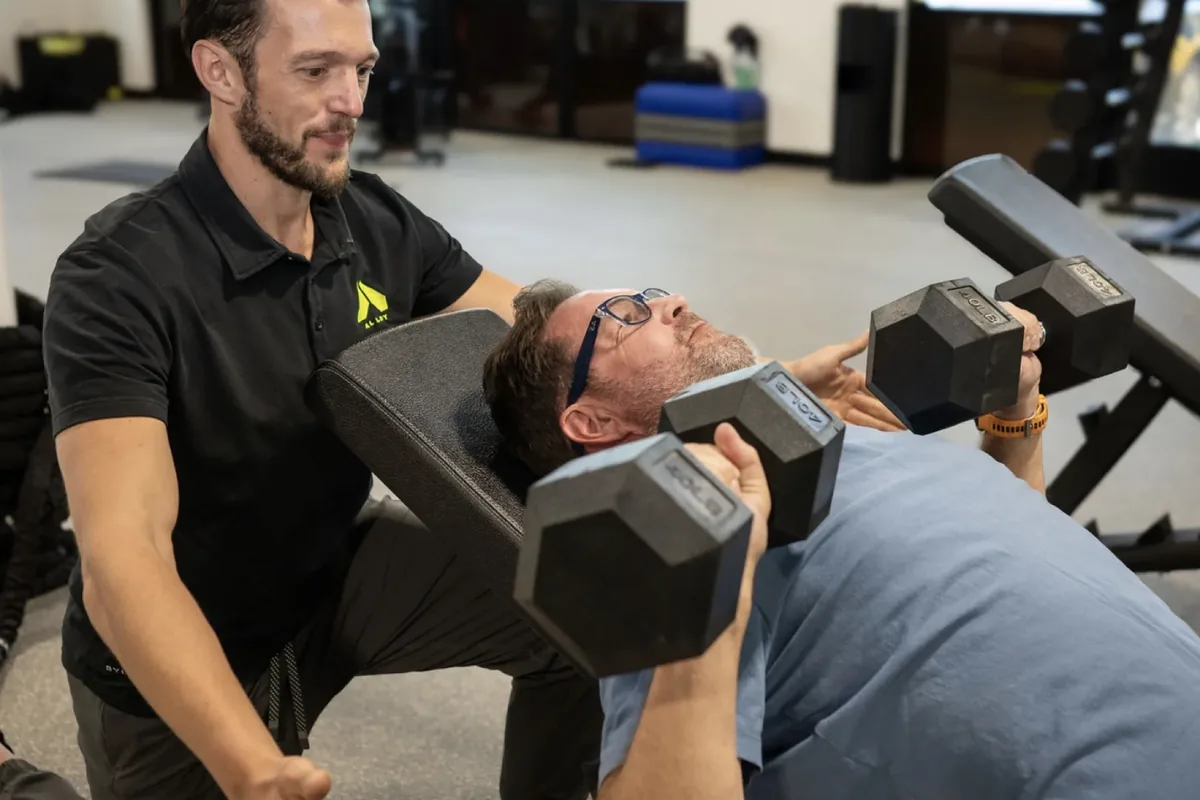
At Alloy Personal Training Middleton, that supervision is the core of small group personal training. Sessions are capped at six members and run about 50 minutes, coach-led from start to finish, with every exercise progressed or modified for the person doing it. Programming is structured and progress is tracked, starting with an InBody body composition scan at your first session and repeating monthly; the scan measures muscle mass, body fat percentage, and water balance. Most members notice improvements in energy, strength, and confidence within the first few weeks, and body composition changes typically show over 8 to 12 weeks. Long-term results come from consistency, and consistency is what any price should be measured against.
Key Takeaway
Personal training prices depend on experience, session length, and how many people share the coach. Thumbtack's Madison-area range for one-on-one training is $35 to $90 an hour, and small group training typically costs less per session. The number that matters is cost per workout you actually complete: a 2006 study found members on pricier flat monthly gym contracts paid more than $17 per visit, and a 2024 meta-analysis found supervised exercise beat unsupervised at the same attendance. Pay for what you will use, with a coach watching.
What should you ask before you sign up anywhere?
Ask the questions that turn a sticker price into a cost per workout, whether you are touring our studio on Greenway Blvd or any other gym:
- What does the price include? An assessment, a written program, and progress tracking, or floor access and nothing more?
- What is the group-size cap? Ask for the hard limit, not the typical turnout.
- What are the contract terms? Minimum commitment, cancellation, and what happens when you travel or miss a week.
- How will you know it is working? Look for retested benchmarks or regular measurements, not just how tired you feel afterward.
- How often will you realistically go? Answer this one for yourself. It decides the real cost of everything else on the list.
Then decide how long you want coaching to last. Some people want a few months to learn the lifts with good form; others want a coach as a long-term structure. Our guide on how long you need a personal trainer covers that decision. Factor in the drive, too. A studio on your actual route, whether you are coming from Verona, Fitchburg, Cross Plains, or Waunakee, is easier to keep showing up to than one across town.
How do you start, and when do you talk price?
Start with the complimentary VIP Session, and talk price there. The session is free and comes with no obligation. It includes a strength and mobility assessment, an InBody scan, a goal-setting conversation, a customized fitness plan, and a small group training preview, so you see exactly what the coaching looks like before deciding whether it is worth it to you. The straightforward pricing conversation happens during that same visit, in person, with no pressure and no games.
Get Your Complimentary VIP Session at our studio at 8333 Greenway Blvd, Suite 140, just off the Beltline on Middleton's west side. If you would like more detail before booking, here is how the complimentary VIP Session works.